Join Conservation Nebraska for an engaging webinar exploring the importance of grassland management and prescribed burns in preserving Nebraska’s prairie and grasslands. Hear from Dr. David Wedin, the Director of the Center for Grassland Studies and Professor of the School of Natural Resources for the University of Nebraska-Lincoln.
This event was organized by Conservation Nebraska and with the support of an AmeriCorps grant. Opinions or points of view expressed in this presentation are those of the speakers and do not necessarily reflect the official position of, or a position that is endorsed by, AmeriCorps or Conservation Nebraska.
Content
NINE-MILE PRAIRIE
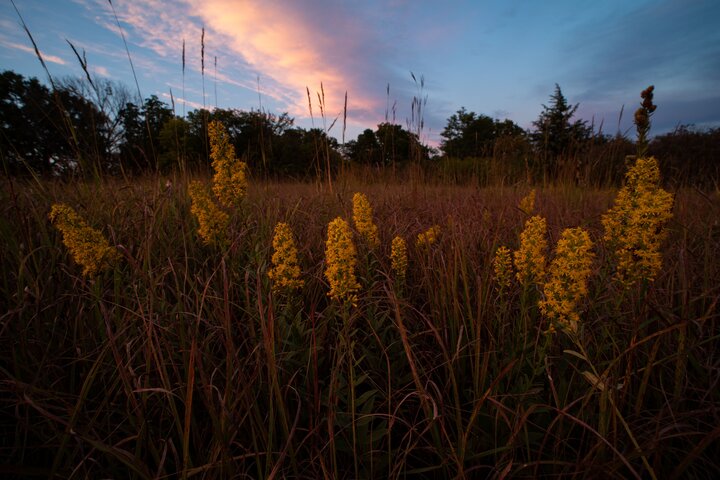
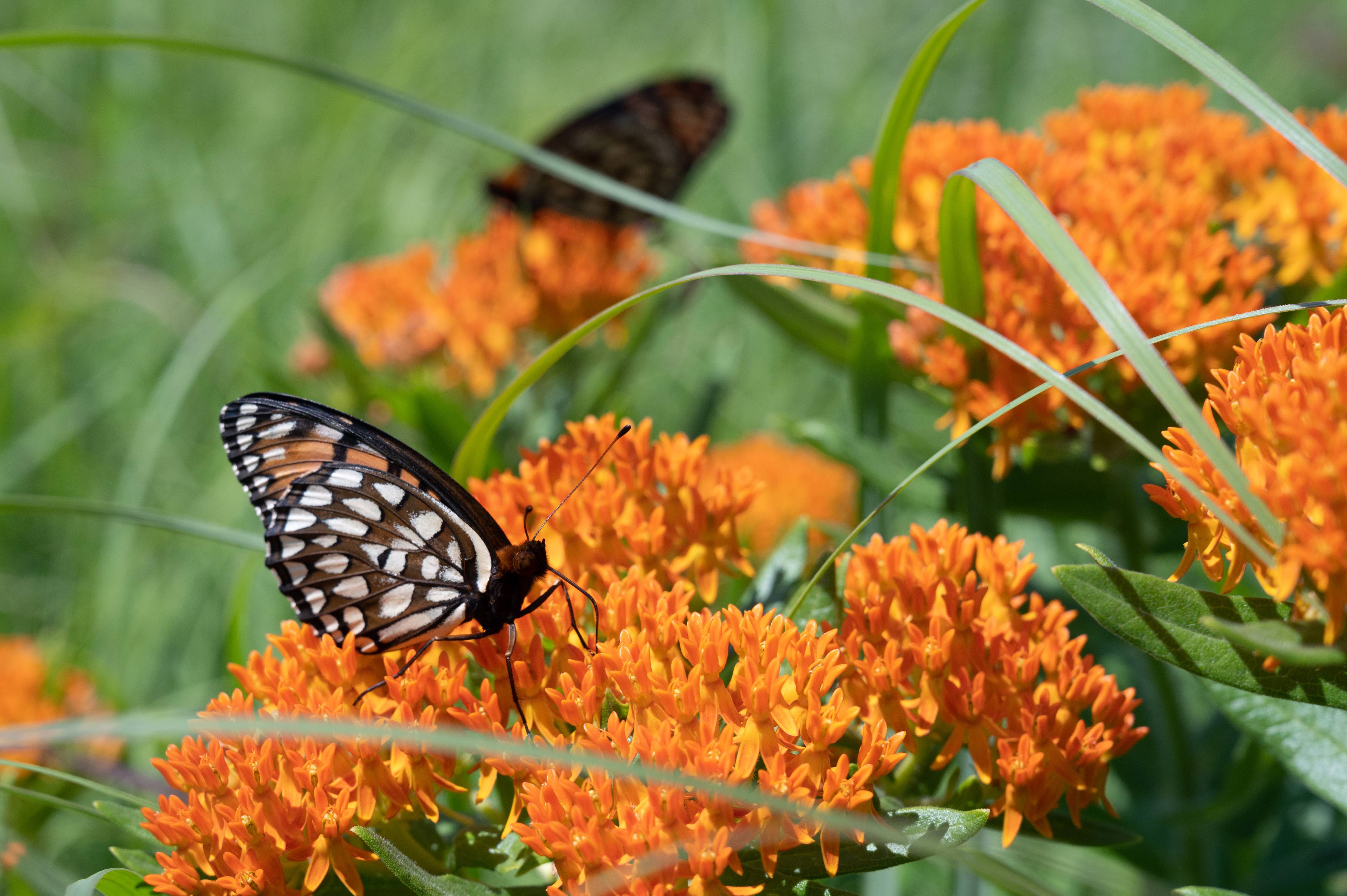
Three hundred and ninety-two vascular plant species and over 80 species of birds have been observed on the prairie. Notable species include the federally-threatened prairie white fringed orchid (Platanthera praeclara) and the rare regal fritillary butterfly (Speyeria idalia). The prairie is also used as a seed source of local genotypes of grasses and wildflowers for use in prairie restoration efforts in the region. The Nine-Mile Prairie Management Committee, comprised of University of Nebraska–Lincoln faculty from several different departments plus resource people from several agencies and organizations, is charged with the stewardship of this biological treasure. Management consists of springtime burning on a 3-year fire-return interval, along with periodic haying and weed/brush control using herbicides. The prairie has not been grazed since 1968.
DALBEY PRAIRIE
The Dalbey Section, comprised of 640 acres, near Virginia, Nebraska was given to the University of Nebraska Foundation in January 1944 by Dwight Stout Dalbey. The section was native prairie and the university agreed to never plow it but to use it for livestock and grassland management research and education programs. In April of 2020, 505 acres of the Dalbey Section were sold by the University of Nebraska. The remaining 135 acres of the Dalbey Section were established as the Dalbey Prairie under the management of UNL’s Center for Grassland Studies.
These changes for the prairie were the result of five years’ efforts to honor the intentions of the Dalbey family. A conservation easement with the Nebraska Land Trust was placed on the 505 acres of the Dalbey Section before it was sold in April 2020 to guarantee the land is never plowed, subdivided or developed. This also promises that it will remain productive, private grassland that contributes to the local economy and local tax base.
“We’re interested in maintaining the quality of the habitat and also still showing that it’s compatible with being a working grassland that produces some grazing or hay,” said David Wedin, director of the Dalbey Prairie. “In that sense, it’s kind of a demo project for how conservation and management can go together.”
The remaining 135-acre prairie was kept by the university because it was the property’s best quality prairie with a high diversity of native prairie plants and low numbers of invasive plants. The long-term management and research at the property has always and will continue to integrate haying, with prescribed burns interspersed, as management tools. The stewardship of the hay meadow over the last 75 years is apparent in its biodiversity.
Solomon Butcher: Frontier Photographer