
-
College
-
Major
Grassland Systems -
Hours Required
120 credit hours
Program Features
Your Destination for Prairie Ecology
As the birthplace of prairie ecology, Nebraska offers a strong foundation in integrated grassland management. Students learn to balance multiple uses of grasslands, including water resources, wildlife habitats, foraging, recreation and aesthetics.
Prepare for the Workforce
The curriculum meets federal civil service requirements for rangeland management specialist positions and helps prepare students for careers with environmental consulting firms, natural resources districts, nonprofit organizations and local, state and federal natural resource agencies.
Diverse Learning Experiences
Students gain hands-on experience through coursework, seminars, capstone projects and optional internships. Opportunities with government agencies, research organizations and private industry help students apply classroom knowledge in professional settings.
Notable Courses
Soil Resources (PLAS 153)
Explore the physical, chemical and biological properties of soils in relation to their uses, protection and roles or functions in broader plant-soil systems.
Range Management and Improvement (GRAS 340)
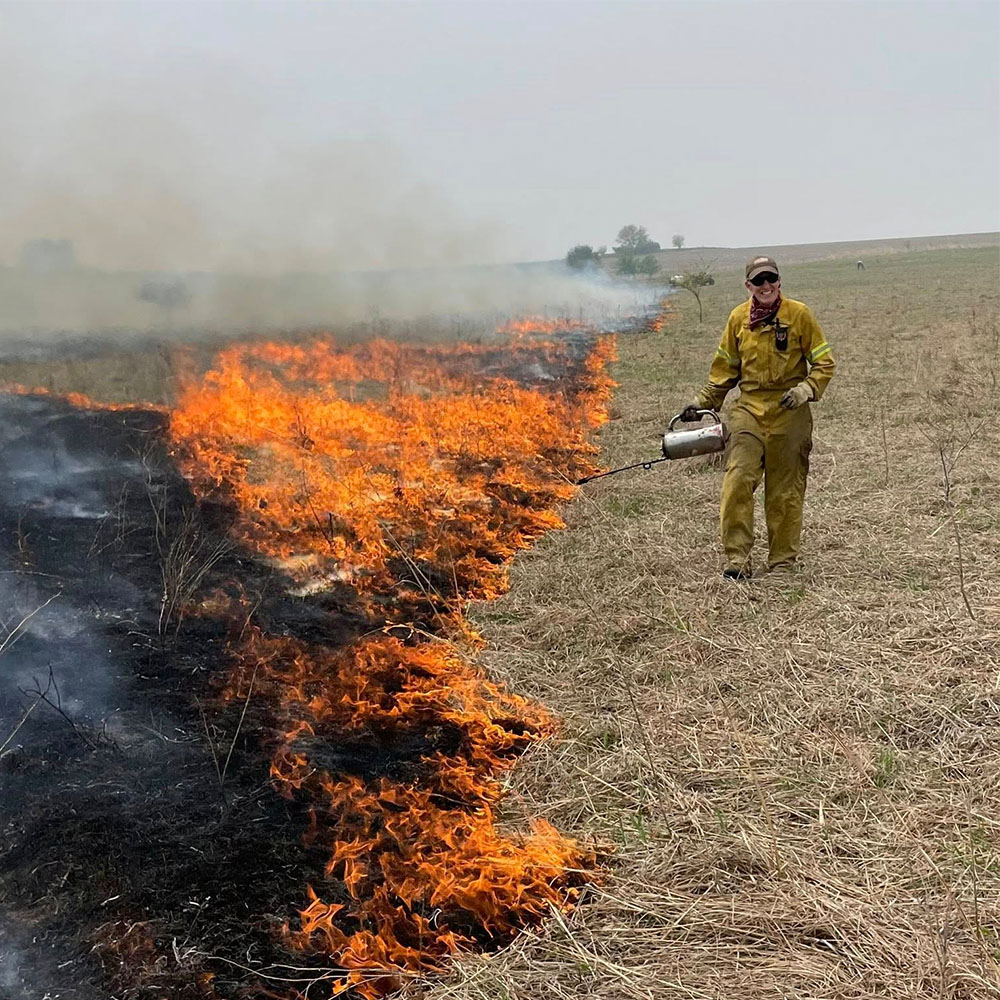
Learn principles of range management, including grazing systems, plant control methods, prescribed burning and grassland improvement practices.
Grassland Conservation: Planning and Management (NRES 438)
Apply grassland ecology principles to conservation planning and learn strategies for establishing and managing grassland ecosystems.
Introduction to Conservation Biology (NRES 211)
Examine how ecology, genetics, evolution and wildlife biology intersect with economics, politics and philosophy.
Wildland Plants (GRAS 442)
Identify, classify and learn to utilize wildland plants important to grassland and shrubland ecosystem management and production.
Water Science (NRES 281)
Study water science through natural and social science perspectives.
Wildlife Ecology and Management (NRES 311)
Explore applied ecology, conservation biology, population biology and enhancement of vertebrate, non-domestic animal populations through management.
Huskers Do Big Things
Internships
- Intern, Otter Creek Organic Farm, Avoca, Wisconsin
- Pathways Program Intern, USDA Natural Resources Conservation Service, Lincoln, Nebraska
- Intern, Lower Loup Natural Resources District, Ord, Nebraska
- Student Manager, Nine-Mile Prairie, University of Nebraska–Lincoln, Lincoln, Nebraska
Careers
- Preserve Assistant Manager, The Nature Conservancy, Ainsworth, Nebraska
- Soil Conservationist, USDA Natural Resources Conservation Service, David City, Nebraska
- Private Lands Biologist, Pheasants Forever, Fairbury, Nebraska
- Habitat Program Manager, Spring Creek Prairie Audubon Center, Denton, Nebraska
Graduate Schools
- M.S in Natural Resource Sciences, University of Nebraska–Lincoln
- M.S. in Wildlife, Aquatic and Wildlands Science, Texas Tech University
- M.S. in Wildlife Biology, Fort Hayes State
- M.S. in Plant Pathology, University of Nebraska–Lincoln
Have Questions? We're Here to Help
If you have questions about the Grassland Ecology and Management, contact us.

- Contact Name
- Sue Ellen Pegg
- Contact Title
- College Relations Director
- Phone
-
-